
Art Piece No. 001
Assemblage Brooch
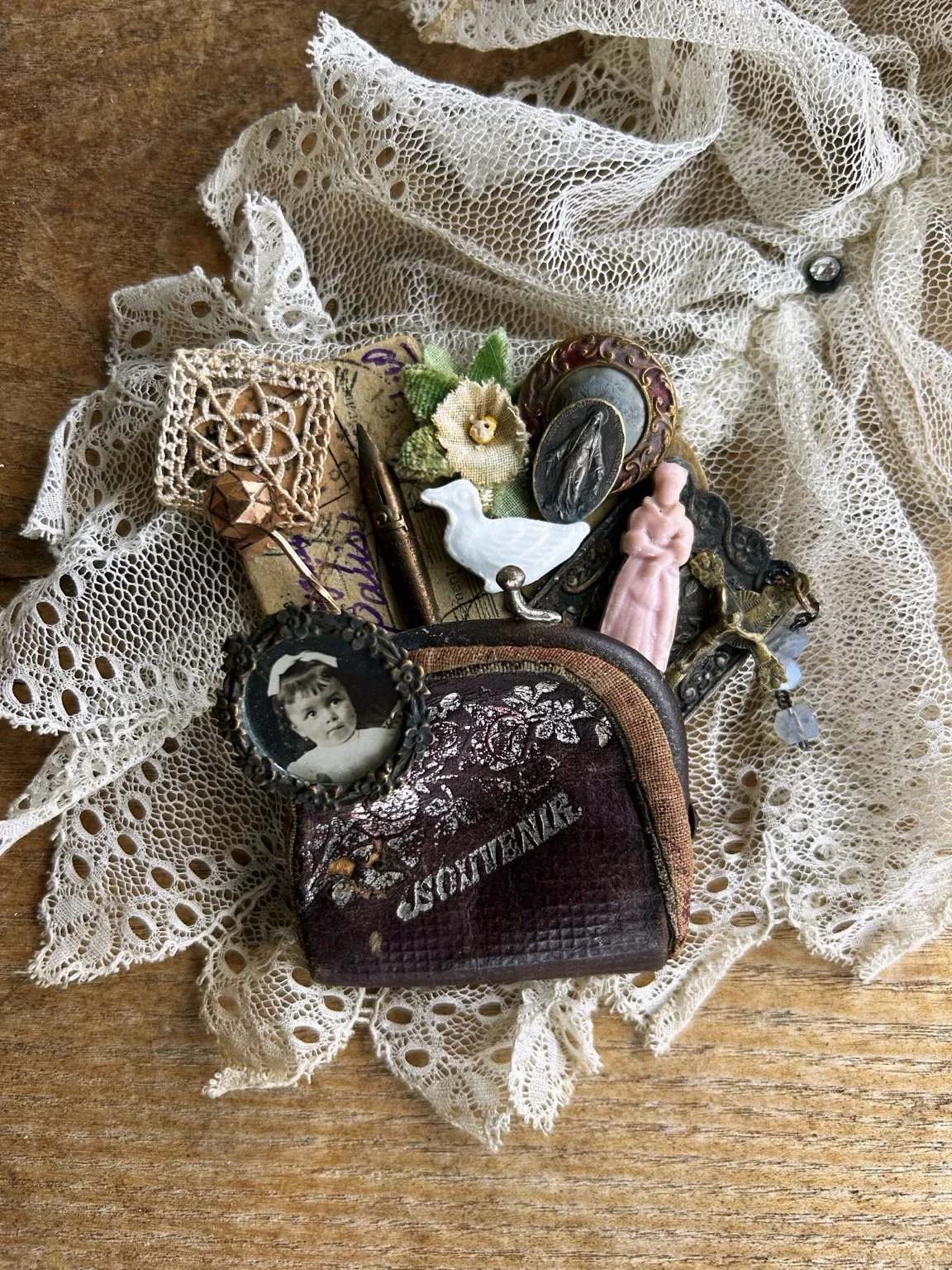
A gathering of small histories.
Once forgotten, these small objects have found one another again.
An antique photograph, timeworn lace, a tiny French porcelain fève, an old crucifix, beads, and a faded flower are gathered together to create a wearable assemblage—each piece carrying traces of a life and history of its own.
Rather than restoring these objects to what they once were, I wanted to preserve their age, their imperfections, and the mystery of where they have been.
Found. Remembered. Kept.
Antique Photo Brooch
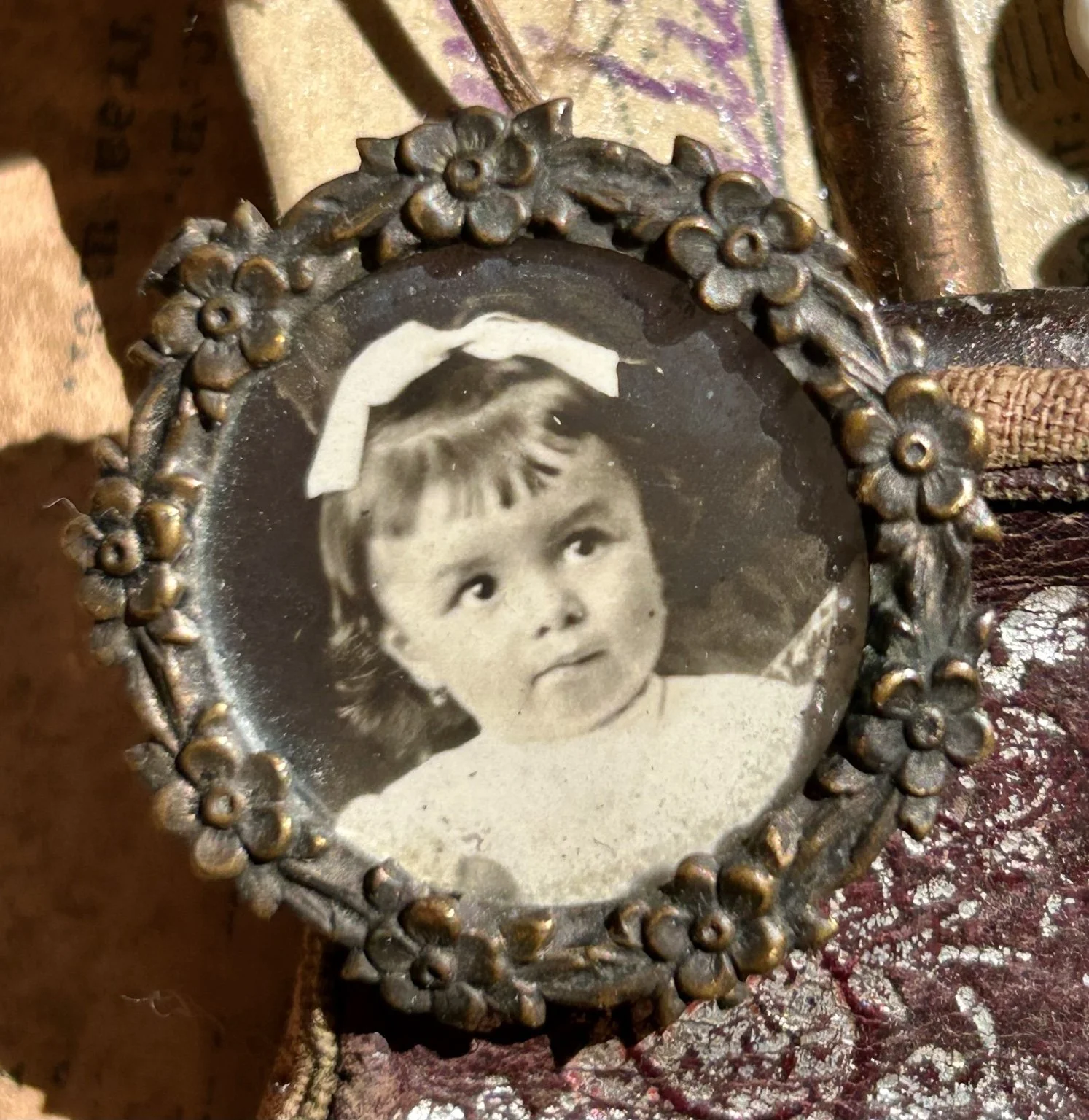
Found at a French flea market, this little brass-toned brooch is edged with delicate flowers and holds the photograph of an unknown child beneath a small, round disc of glass.
Nothing on the back tells us her name or who once treasured her photograph. So, for the purposes of The Keeper’s Archive, I have given her one: Margeux.
Her tiny earrings, solemn expression, and carefully tied bow are among the details that made me unable to leave her behind. Whoever she was, someone once thought her likeness precious enough to keep.
And now, she is kept again.
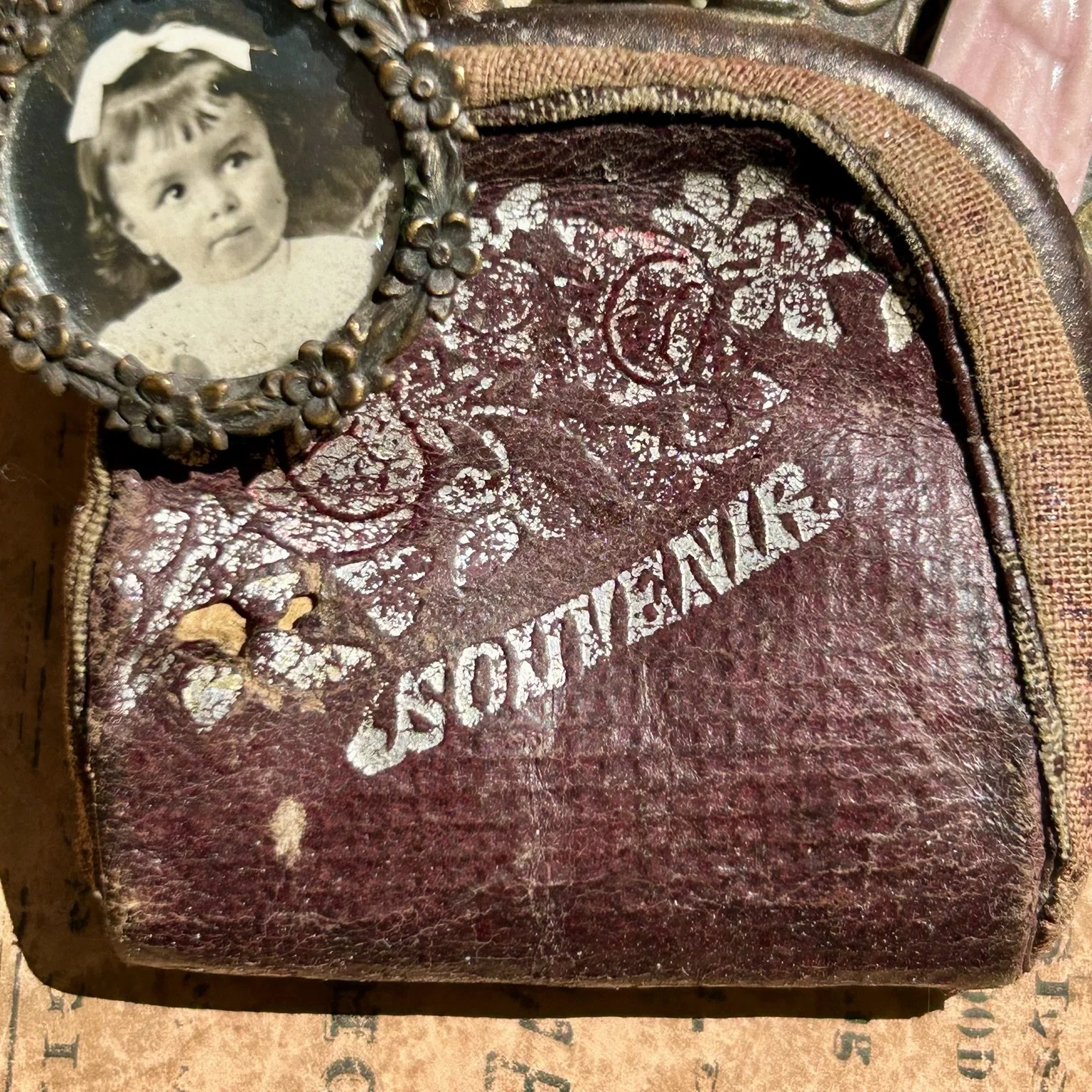
Antique Souvenir Leather Change Purse
Found at a flea market in France, this tiny burgundy leather change purse bears a single word across its worn surface: SOUVENIR.
Its original owner and the place it was meant to remember have been lost to time. Perhaps it once held a few coins from a journey, tucked into a pocket or handbag and carried home as a remembrance of somewhere special.
The years have left their marks—the beautifully aged leather, worn edges, faded lettering, and softened surface—but those imperfections are precisely what drew me to it.
Once made to hold coins, it now holds something entirely different: a collection of small, forgotten things, gathered together and given a new story.
A souvenir once more.
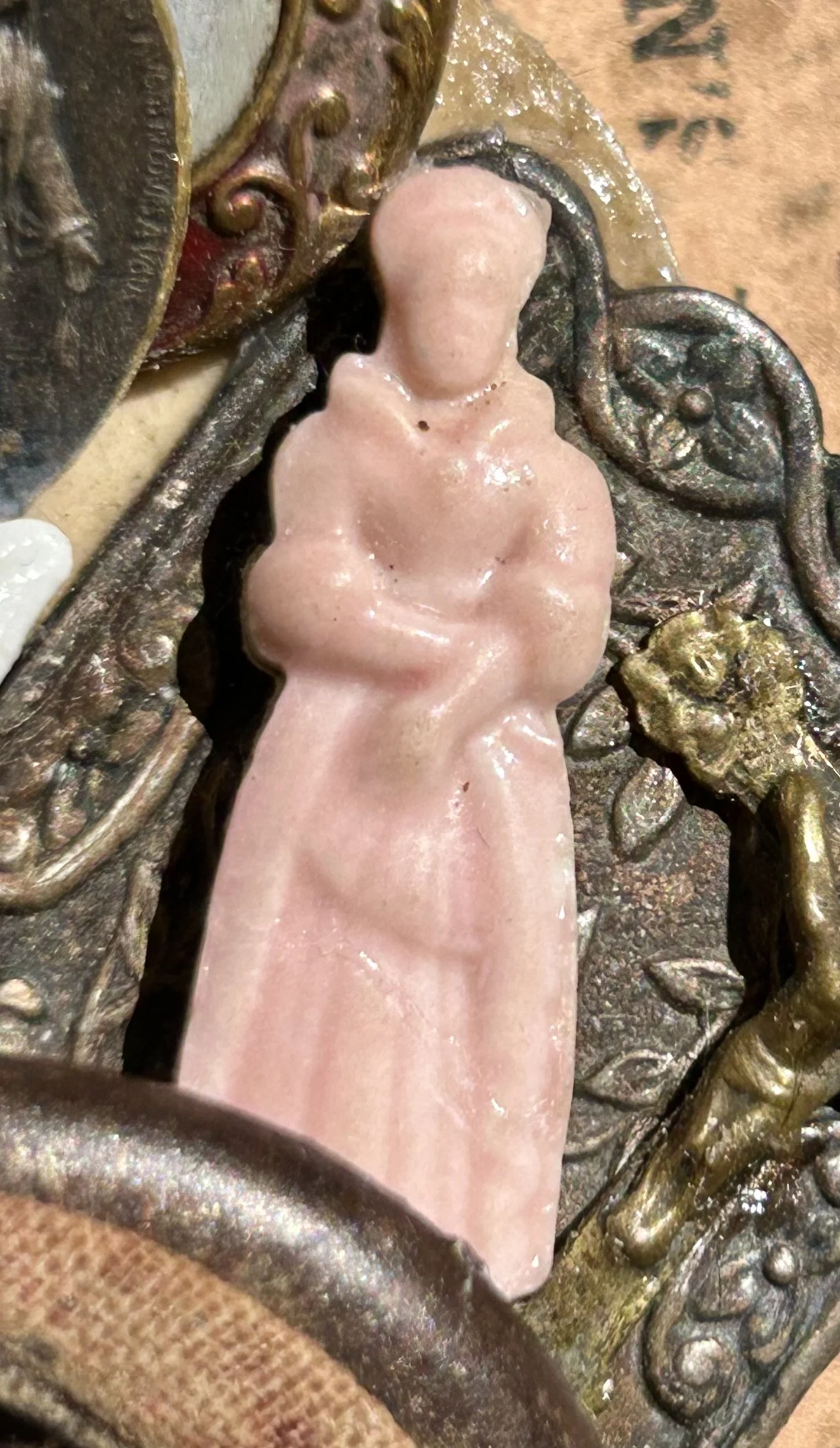
French Porcelain Fève
This tiny pink porcelain figure is a French fève—small enough to rest in the palm of a hand and yet made to be discovered.
Her softly molded figure, long dress, folded arms, and delicate blush-pink glaze immediately caught my eye. Among the aged metals, faded paper, and deeper colors of the assemblage, she brings an unexpected softness.
Fèves are little objects with a history much larger than their size. This one has already lived a life before finding its way into my collection.
For now, she is simply found.
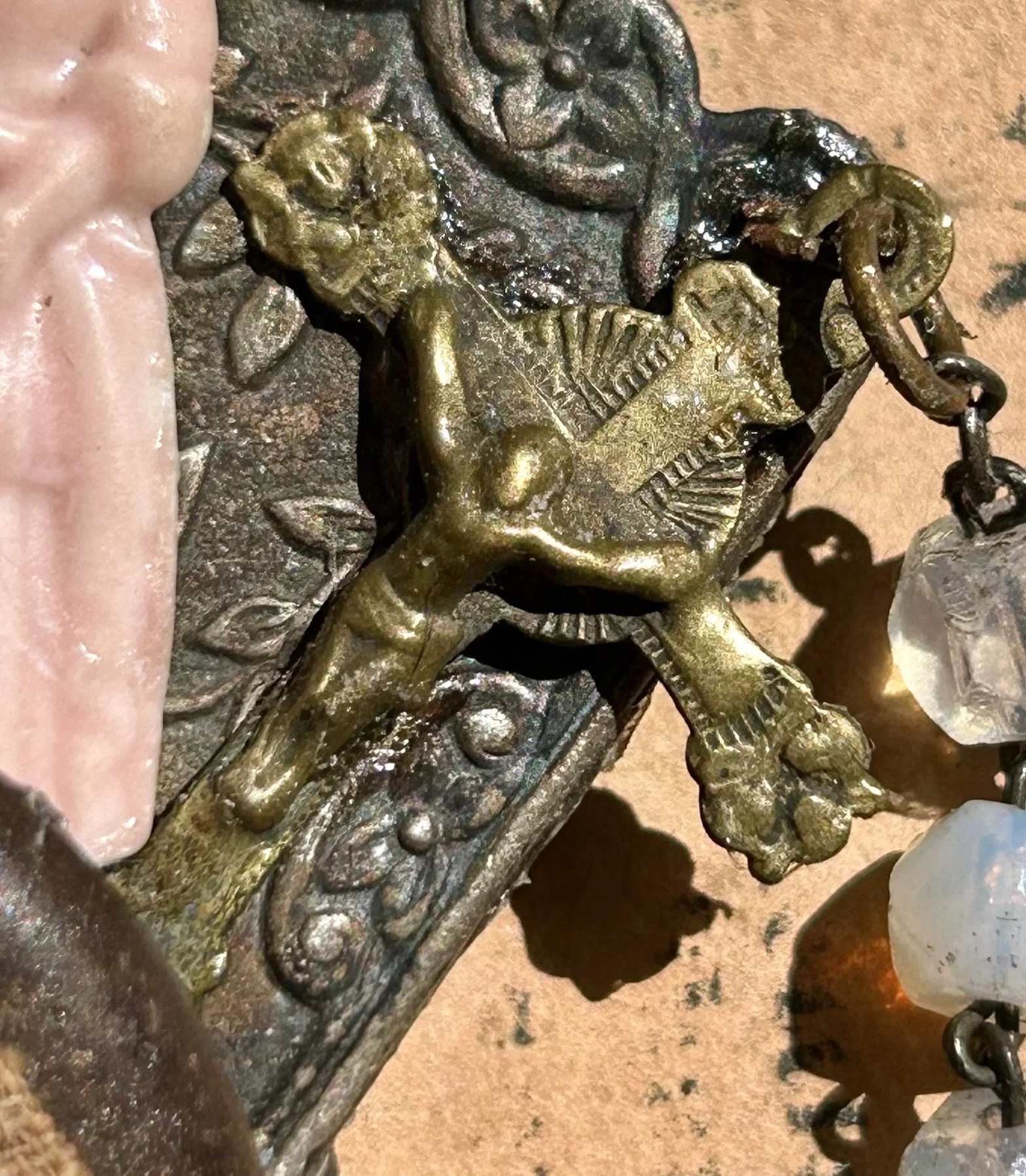
Brass Rosary Crucifix
This small brass crucifix once belonged to a rosary. Time has softened its surface and darkened the metal, leaving touches of warm brass visible along the raised details.
Separated from the rosary it once belonged to, it came to me as a fragment—an object that had lost its original whole, but not its meaning.
I was drawn to the evidence of age it carried and to the quiet weight such a small object could bring to the assemblage.
Once part of something larger, it has found a place among these other fragments.
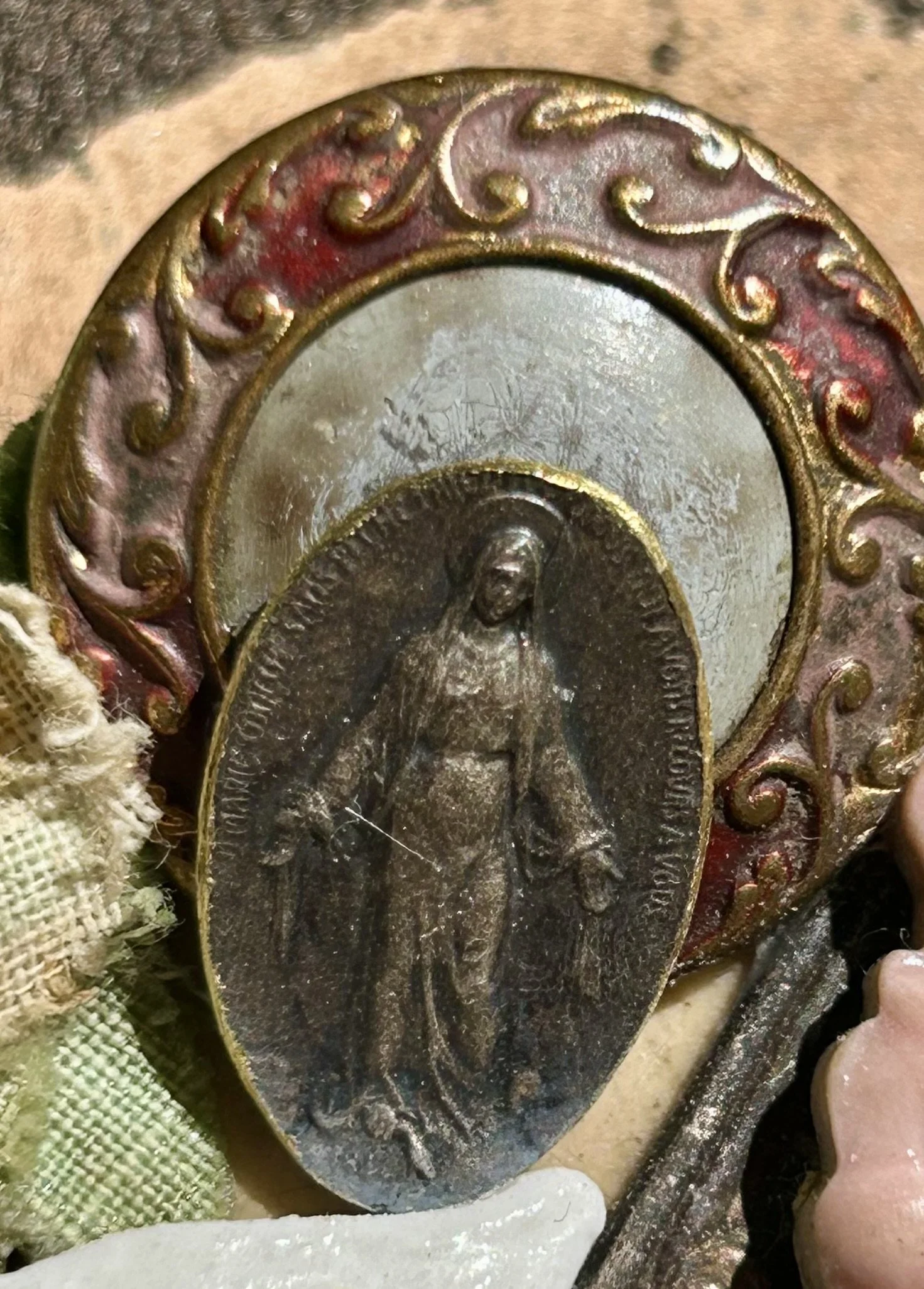
French Religious Medal & Antique Button
Found at a flea market in France, this small religious medal arrived with the traces of its former purpose still intact. It was originally meant to be worn, with a loop and jump ring at the top for suspending it from a chain.
For this assemblage, I removed the loop and carefully smoothed the remaining metal with a Dremel, allowing the medal to take on a new form while leaving the age and character of its surface untouched.
Behind it rests an antique button, its faded color and ornamental border becoming an unexpected frame for the medal.
Two objects that once belonged to entirely different things, now layered together.
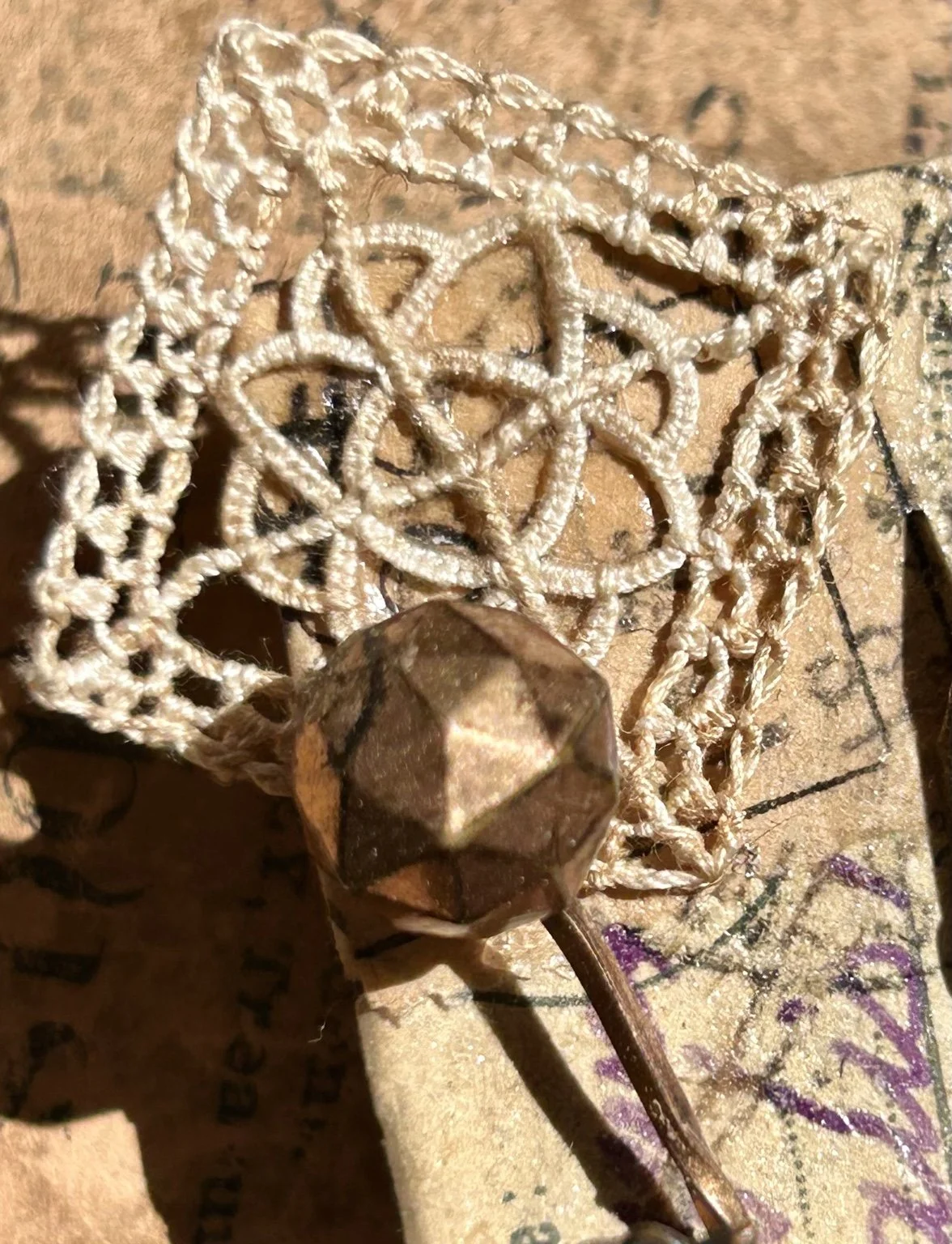
French Antique Lace & Antique Hat Pin
The lace came to me from a woman in France who was selling pieces from her collection of antique wares. It arrived as part of a large bundle of small lace squares—each one different, each carrying the delicate evidence of having survived another time.
I chose this particular piece for its tiny flower-like pattern and the softness it brings against the harder, darker objects in the assemblage.
Resting across it is an antique hat pin, its long slender stem ending in a beautifully faceted, bronze-colored head. Once both decorative and useful, it would have been worn to secure a woman's hat in place.
Here, the two have been brought together: something soft and fragile beneath something strong and utilitarian.
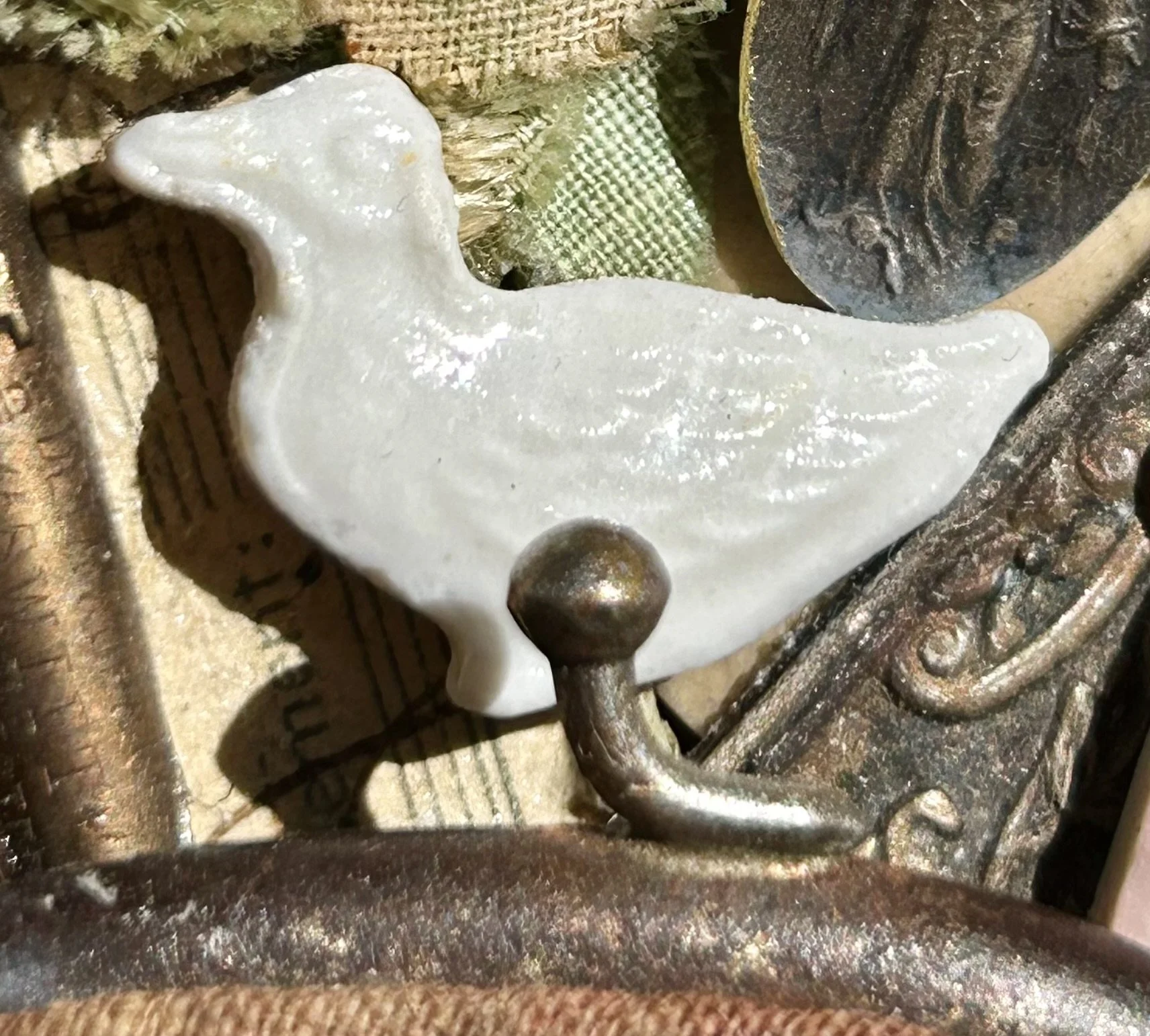
French Glazed Duck Fève
This tiny glazed duck is a French fève, found among a group of others at a flea market in France.
Small enough to almost disappear among the larger objects of the assemblage, its glossy surface and softly modeled form give it a character all its own. I was drawn to the simple charm of something so small that had somehow managed to survive long enough to find its way into my hands.
Once one among many, I chose this particular little duck to become part of the assemblage.
Here, tucked among lace, metal, paper, and other fragments of the past, it has found a new place to belong.
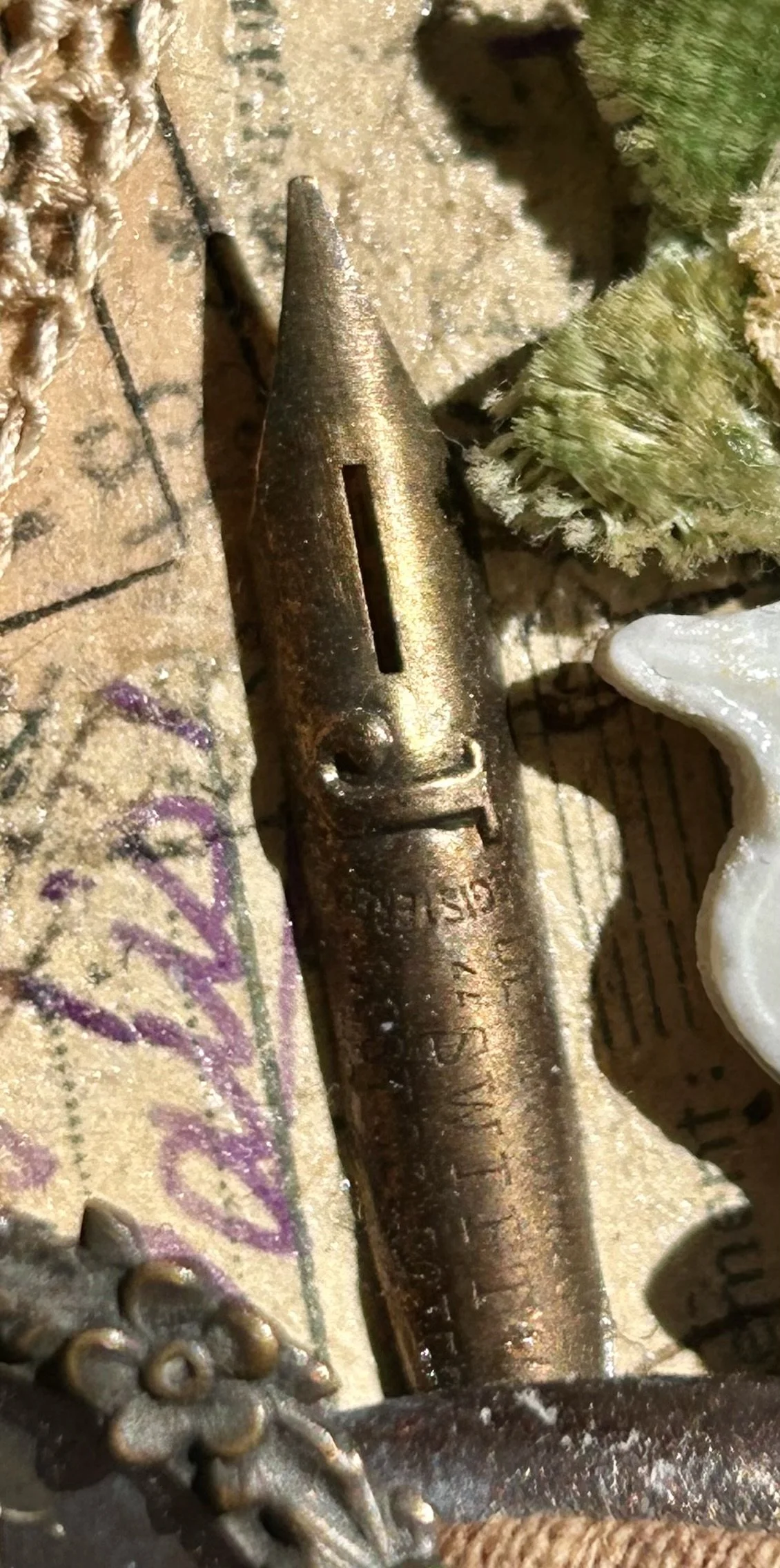
Antique Pen Nib
I found this old metal pen nib tucked among a box of others at Big Peach Antiques in Byron, Georgia.
Once made to carry ink across paper, its purpose was entirely ordinary—to form words, names, perhaps letters and stories. What it may have written, and whose hand once held the pen it belonged to, are things I will never know.
Its darkened metal and worn surface were what drew me to it. Removed from its original purpose, it had become a tiny fragment of something that once helped put thoughts into words.
Now, instead of writing the story, it has become part of one.
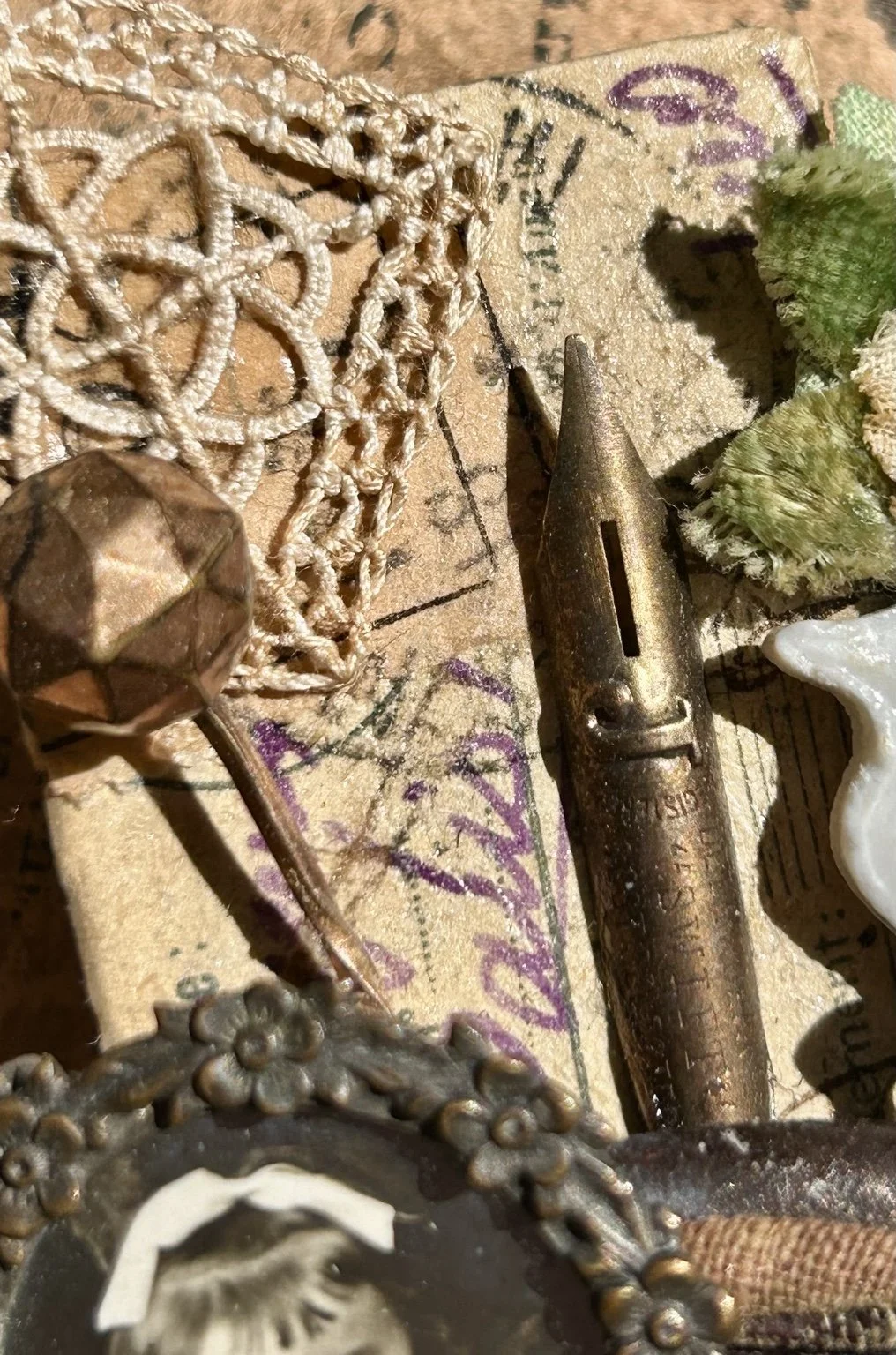
Fragment of an Antique French Identification Document
Beneath the objects of the assemblage lies a fragment of an antique French identification document, its aged paper marked with elegant cursive handwriting in purple ink and an official stamp.
Of all the writing that remains, one word mattered particularly to me: Paris.
As I arranged the other French objects—the flea-market finds, the fèves, the lace—I deliberately left that handwritten word uncovered. Much of the document would eventually disappear beneath the objects placed upon it, but I wanted Paris to remain visible, quietly connecting them to the place from which so many of their stories came.
Because the old paper was too delicate to serve as a foundation on its own, I decoupaged the fragment onto a very thin piece of wood, giving it the strength to support the assemblage without losing the character of the original paper.
It became more than a background.
It became the page upon which the other objects could tell their story.
Vintage Silk Flower from a Girl’s Dress
This small silk flower once adorned a vintage girl’s dress that I found in an antique store in Cataula, Georgia.
I removed the flower from the dress to preserve and use it in the assemblage. Its petals have softened and faded with age, leaving behind delicate creases, muted color, and the beautiful imperfections of something that has already lived a life before finding its way here.
Among the metal, porcelain, leather, and old paper, the flower brings a softness that none of the other objects could. I especially loved the idea that something once chosen to decorate a little girl’s dress could survive long after the child who wore it had grown.
I chose not to restore the flower or disguise the evidence of its age. The fading, fraying, and wear are part of its story.
Once worn. Then found. And now, kept.